Can Your Child Swim or Can They Just Get Across the Pool?
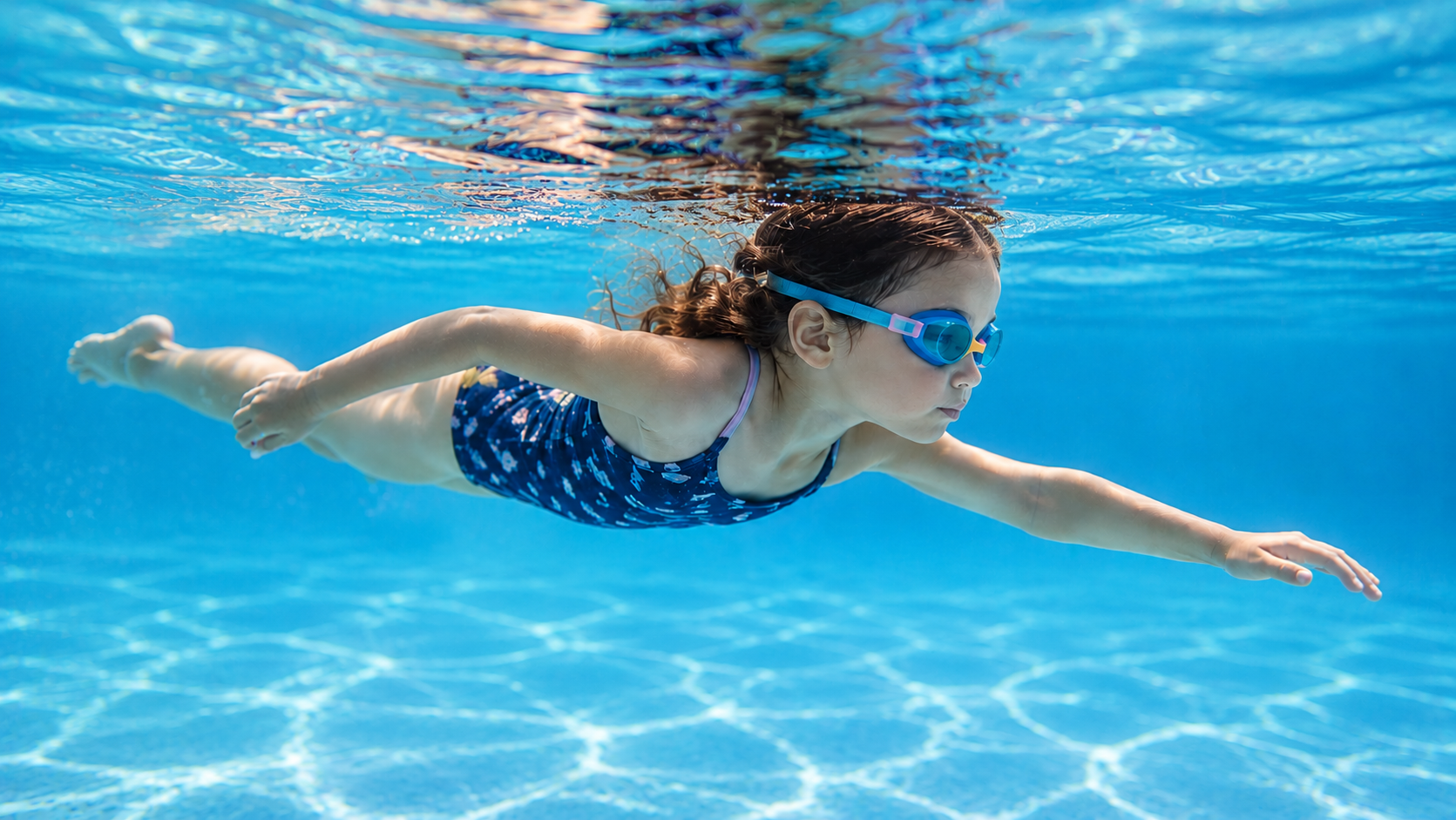
Child swimming independently with calm, confident technique
Seeing your child swim independently for the first time is a wonderful moment.
The few metres that once seemed impossible suddenly become a width and, before long, perhaps an entire length. For a child, reaching that first wall brings an enormous sense of achievement. For a parent, it is often the moment when swimming lessons begin to feel as though they have truly paid off.
At SwimJar, we celebrate those moments too. But we also know that some of the most important progress in children's swimming happens long before it can be measured in metres.
A child is learning how to balance in an unfamiliar environment, how to breathe comfortably, how to coordinate different parts of the body and how to move without using more effort than necessary. Gradually, those individual skills begin to come together and swimming starts to feel more natural.
The distance follows. This is why SwimJar places so much importance on how a child learns to swim, not simply how far they can swim.
Building the swimmer before chasing the distance
Children are wonderfully resourceful. Give them a destination in the pool and many will find a way to reach it. Determination is a lovely quality, but in swimming, effort alone doesn't always create good movement. A child may reach the wall by kicking very hard, lifting their head or rushing their movements. They have achieved the distance, but their body is still discovering how swimming really works.
That is completely normal. Rather than rushing to add more metres, SwimJar uses these early stages to develop the foundations underneath the swimming.
Balance comes before unnecessary effort. Breathing becomes comfortable rather than hurried. Body position becomes more natural. Arms and legs gradually learn to work together. Rhythm begins to replace rushing. Over time, something lovely happens: the child doesn't simply become capable of swimming further. Swimming begins to feel easier. That feeling matters. A child who discovers that they don't need to fight the water begins to develop a very different relationship with it.
Children learn swimming through their whole body
Learning to swim is a remarkable physical achievement. On land, children have spent years learning how to balance, walk, run, jump and coordinate their movements. In the pool, many of those familiar rules suddenly change. The body becomes horizontal. Water supports it but also creates resistance. Breathing has to work around the movement. Arms and legs have different jobs and everything needs to happen with timing and coordination.
It is a lot for a developing body to organise. This is why children don't all progress at exactly the same speed. Some are naturally adventurous. Some are more cautious. Some understand a movement almost immediately while others need to experience it many times before it becomes familiar.
At SwimJar, those differences aren't treated as problems. They are part of learning. We allow children to develop the body awareness, coordination, balance and confidence that their swimming needs rather than expecting every child to arrive at the same milestone in the same way.
There is no benefit in rushing a child through a skill that hasn't yet become secure. Strong foundations make everything that follows easier.
Technique belongs at the beginning
Technique can sometimes sound like something reserved for competitive swimmers. At SwimJar, we see it differently. Good technique simply means helping a child discover a more effective way to move through water. When body position improves, swimming requires less unnecessary effort. When breathing becomes part of the movement, the child feels calmer. When rhythm develops, arms and legs stop feeling like separate instructions that need to be remembered.
And when a child begins to recognise how good movement feels, they become less dependent on somebody continually telling them what to do. This is an important stage in learning. The teacher is no longer simply producing the movement from the poolside. The child is beginning to understand it for themselves. That understanding is something they can keep.
Why SwimJar introduces all four strokes
Front crawl is often the stroke parents associate most closely with learning to swim, but children's swimming development can be much richer than learning one way of getting from one end of the pool to the other. At SwimJar, children are progressively introduced to front crawl, backstroke, breaststroke and butterfly.
Not because we expect a young beginner to perform four perfect strokes. Different strokes teach different things. Backstroke develops awareness of balance without the complication of putting the face into the water. Breaststroke introduces a completely different relationship between timing and propulsion. Butterfly develops rhythm and whole-body movement. Front crawl brings balance, rotation, breathing and coordination together. As children experience different movements, their understanding of water becomes broader. They aren't simply memorising four sets of instructions. They are building a vocabulary of movement. And those skills begin to support one another.
Confidence grows naturally from capability
Confidence is central to children's swimming, but genuine confidence doesn't need to be forced. It develops as the water becomes increasingly familiar and the child discovers what their body can do within it. A child who can float comfortably has one less reason to worry. A child who understands breathing feels less hurried. A child who can change position and regain balance has more control. A child whose movements are becoming efficient has more energy available to enjoy swimming. Each small piece of competence gives the child another reason to trust themselves. That is the kind of confidence SwimJar wants to develop.
Not simply the confidence to jump into a familiar swimming pool, but the quieter confidence that comes from feeling capable in water.
Progress isn't always dramatic
Parents naturally notice the big milestones. The first independent swim. The first width. The first length. A new stroke.
But between those moments are dozens of smaller changes that an experienced swimming teacher notices. A body that sits slightly higher in the water.
A breath that no longer interrupts the stroke. A kick that becomes quieter and more effective. A child who stops rushing. A movement that once required repeated instruction becoming automatic. These changes may look modest from the side of the pool, but together they transform swimming. This is why SwimJar doesn't rush progress simply for the sake of producing another visible milestone. Children are given the opportunity to understand what they are learning and to build upon it. The result is not simply a child who has completed more metres. It is a child becoming a more capable swimmer.
Becoming Water Ready
This philosophy sits behind what SwimJar calls Water Ready. Water Ready isn't another swimming stage or badge. It describes the foundations we want children to carry with them: body awareness, coordination, sound technique, confidence, adaptability and an understanding of how to move comfortably through water.
Where swimming takes them afterwards is entirely individual. Some children may eventually become competitive swimmers. Others may discover diving, surfing or open-water swimming. Many will simply grow into adults who feel completely comfortable swimming on holiday, in the sea or at their local pool.
All of those outcomes begin in much the same place. With strong foundations. So yes, at SwimJar we love seeing a child reach the other side of the pool.
But we are interested in something bigger than the wall. We want the swimming between those two walls to become increasingly balanced, controlled and confident. We want children to understand the water rather than simply work harder against it. And we want the skills they develop in childhood to remain useful long after swimming lessons have finished.
Because learning to swim isn't simply about reaching the other side.
It is about giving a child the confidence and ability to enjoy water for life.