Learning to Move With Water
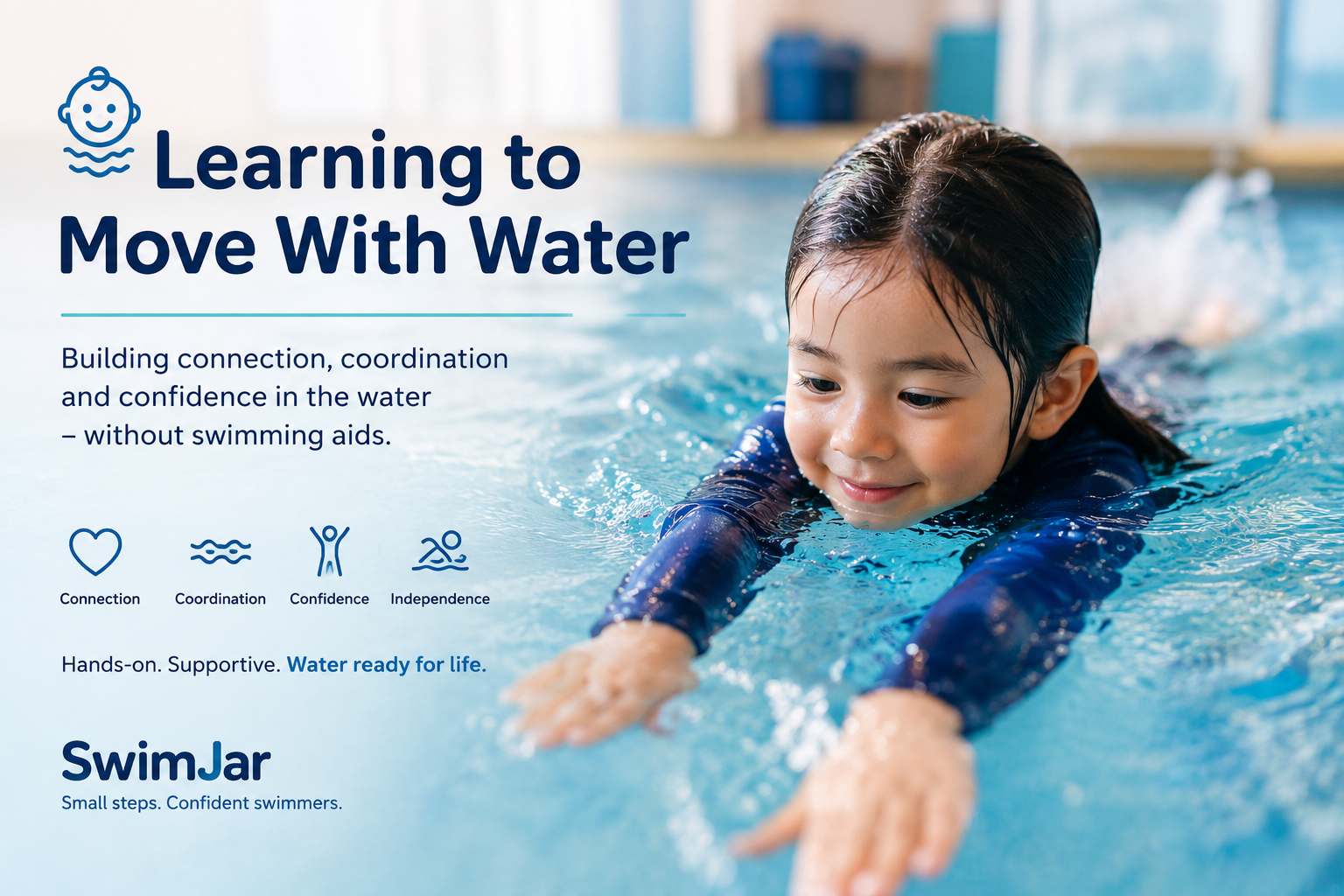
Child developing confidence and coordination through hands-on swim learning.
For many children, swimming begins with instructions. Kick harder. Blow bubbles. Reach further. Hold the float.
Yet before swimming becomes a stroke, it is first an experience.
Water is a completely different environment from the one we move through every day. It changes how the body feels, balances, breathes and responds. Learning to swim involves understanding this new environment and becoming comfortable within it.
At SwimJar, we believe children learn best when they are encouraged to connect with the water rather than simply work against it.
This is why our lessons focus on body awareness, coordination, movement and confidence without over-reliance on swimming aids. Through carefully supported hands-on teaching, children begin to feel how the water supports them, how movement changes balance and how breathing influences confidence and control.
That is when swimming starts to become more natural. Rather than forcing movement, children begin learning how to move with the water. They discover rhythm, timing and coordination in a way that feels calmer, lighter and more connected.
For some children, this process is playful and immediate. For others, it develops gradually through trust, repetition and experience. Both journeys matter equally.
This process helps children become more confident, capable and comfortable in the water. As this confidence grows, so does independence.
Children begin to explore movement more freely, respond to the water more naturally and develop a stronger understanding of how their body works within the aquatic environment.
That is often where real swimming begins.
Not through pressure.
Not through force.
But through connection, coordination and trust in the water itself.